


A cognitive verification method that runs inside your existing safety system. It makes task-specific thinking audible and measurable before workers are exposed to risk. It does not replace your regulations, procedures, permits, or forms. All of that stays. The method verifies that workers have mentally engaged with those controls before execution begins.
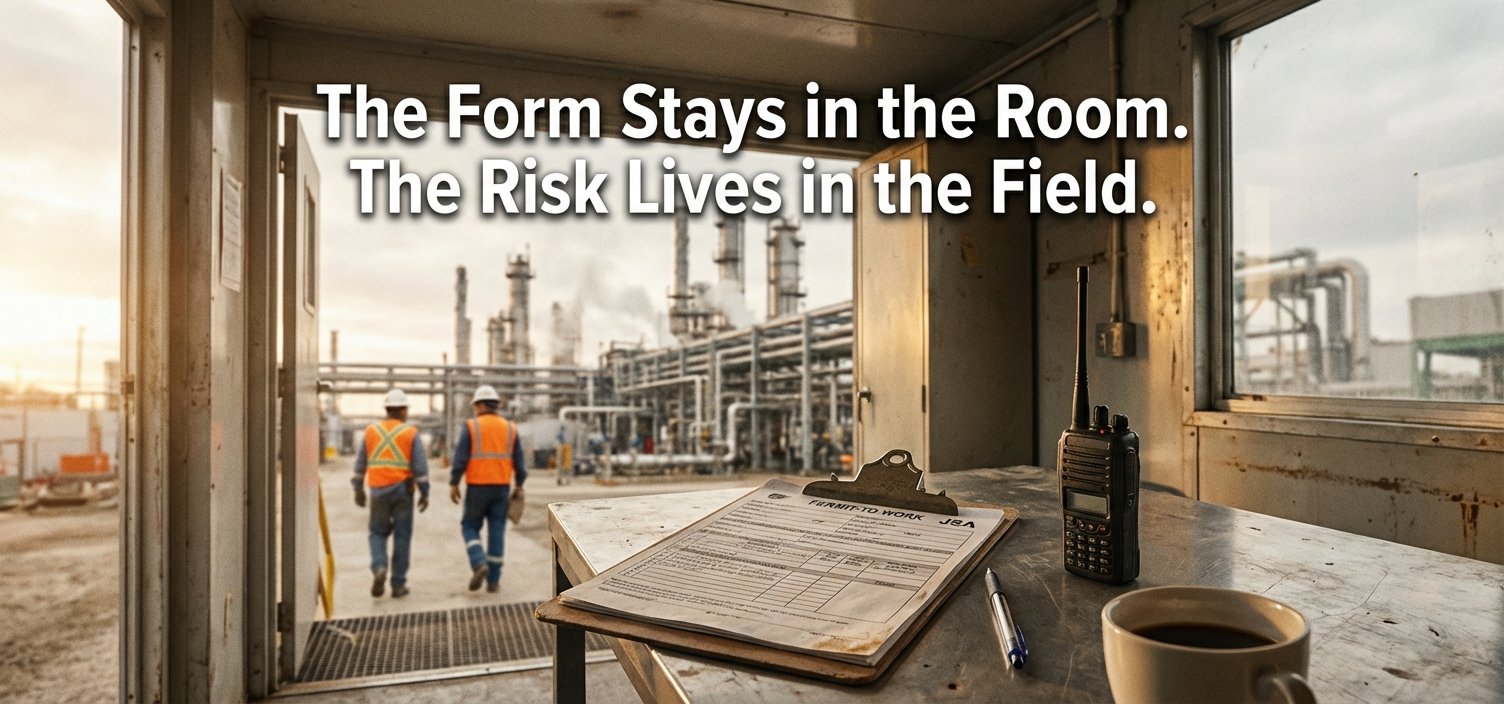
You have been in that room. The JSA was signed. The permit was approved. Every box was checked. And someone still got hurt.
The system verified that paperwork existed. It never verified that anyone was thinking.
Now look at the forms. Where does it say:
It does not. A signature does not signify readiness. That is compliance theater. This is the Verification Gap.
A process that has not been thought about, discussed, and applied in today's conditions is just a piece of paper. It is a record. It proves the meeting happened. It does not prove anyone was thinking.
Will that piece of paper push you out of the line of fire? Will it grab a fire extinguisher when you start a flash? Will it swim out and drag you to shore? It will not.
Nothing in this method eliminates a single regulation, procedure, permit, or form. Compliance is required. OSHA requirements, ISO standards, API recommended practices, company-specific procedures. All of it stays. The method operates inside your existing system, not instead of it.
But compliance alone is not protection. It is documentation. The Sherpa Method adds the verification layer that makes your administrative controls actually work: confirming that workers have mentally engaged with the content of those controls before exposure to risk.
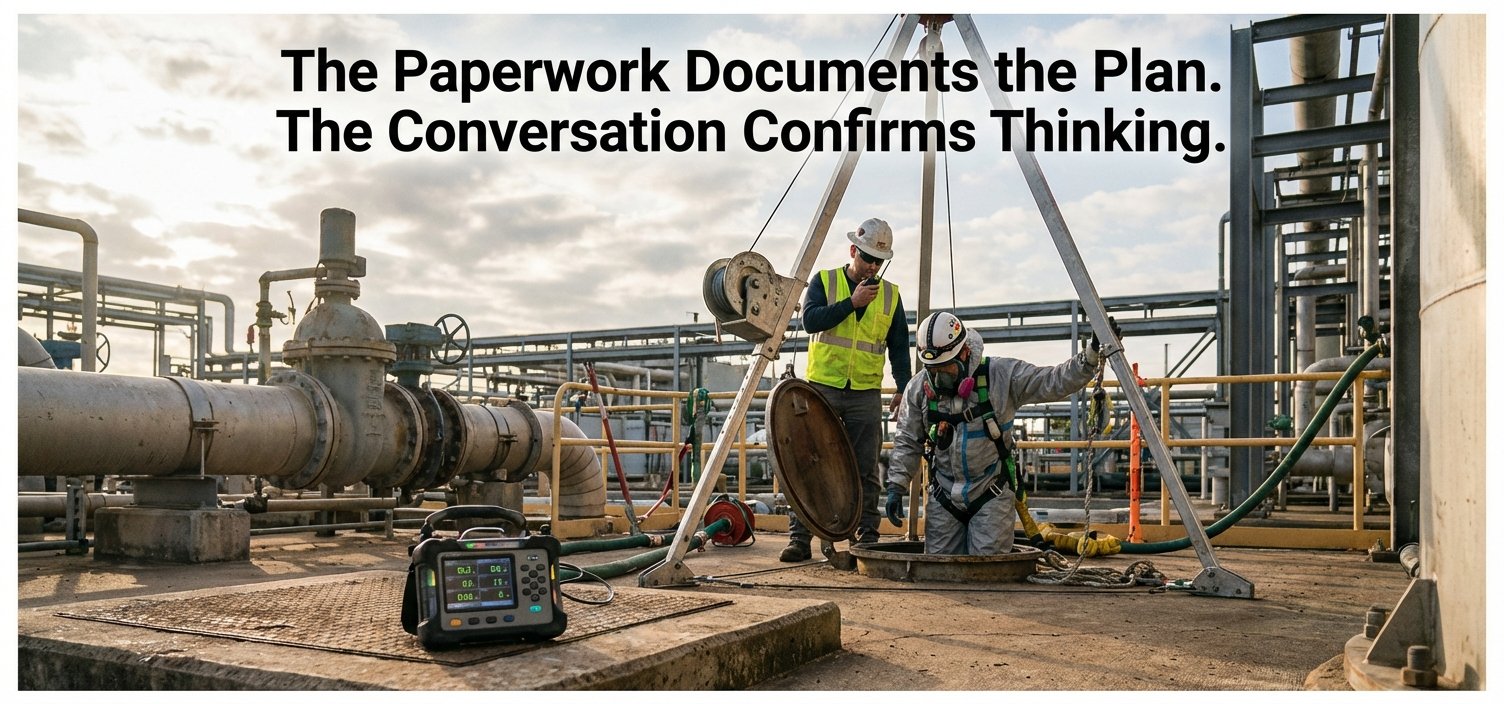
The paperwork documents the plan. The conversation confirms someone is thinking about it.
"Walk me through how you are going to execute this task today."
That prompt switches on critical thinking and makes it audible and visible in 60 seconds. And it does two things at once.
It surfaces what no checklist can detect. A distracted worker gives a thin answer. A complacent worker gives yesterday's answer. A fatigued worker hesitates or skips steps. A rushing worker gives a fast but incomplete answer.
A worker who walks through the task in current conditions is either ready or revealing that they are not. Both outcomes happen before exposure to risk. The 60-second conversation that tells the supervisor whether to proceed is the same conversation that prepares the worker to execute. No device. No form. No additional paperwork.
Either way, they win, you win.
Yes. And that is exactly the problem.
Your best supervisors ask workers to talk through the job. They listen for hesitation. They notice when someone cannot describe the difference between today's conditions and yesterday's. They would call it gut feel or experience. They are right. It works.
But what about the rest? And do your best do it every time? They do it when something feels off. They skip it on routine tasks with familiar crews on calm days, exactly when complacency is highest. And when your best supervisor retires, transfers, or gets promoted, it leaves with them. You cannot teach gut feel. You cannot measure it. You cannot require it.
What your best people figured out is too valuable to leave trapped inside their individual judgment. The method takes what naturals do instinctively and makes it structured, teachable, and measurable for every supervisor on every crew.
Common sense is not common practice. The Sherpa Method installs the discipline.
The discipline of engineering human cognitive readiness into operational systems with the same rigor applied to physical controls. Thinking is a control. We engineer its verification.
Learn More →"Walk Me Through It" replaces binary questions with structured prompts that make worker thinking audible. 60 to 90 seconds. No new forms. One different kind of question.
Learn More →An 8-hour intervention that makes returning to old habits psychologically uncomfortable. Supervisors shift from Tell-Watch-Yell to Ask-Listen-Coach within 24 hours.
Learn More →The industry is obsessed with measuring artifacts. So everything gets written. And nothing changes. If you measure forms, you get forms. If you measure thinking, you get readiness. For the first time, there is a way to measure what actually keeps people alive.
Learn More →Your business may qualify for state-funded training that covers 50% to 100% of the cost of the Crucible intervention. The SBET and IWTP programs exist to help Louisiana employers invest in workforce development. This may be your transformation at no cost.
See If You QualifyDiscuss cognitive verification for your organization. No sales pitch. Just a conversation about where the Verification Gap exists in your operations.
Contact Us